Introduction
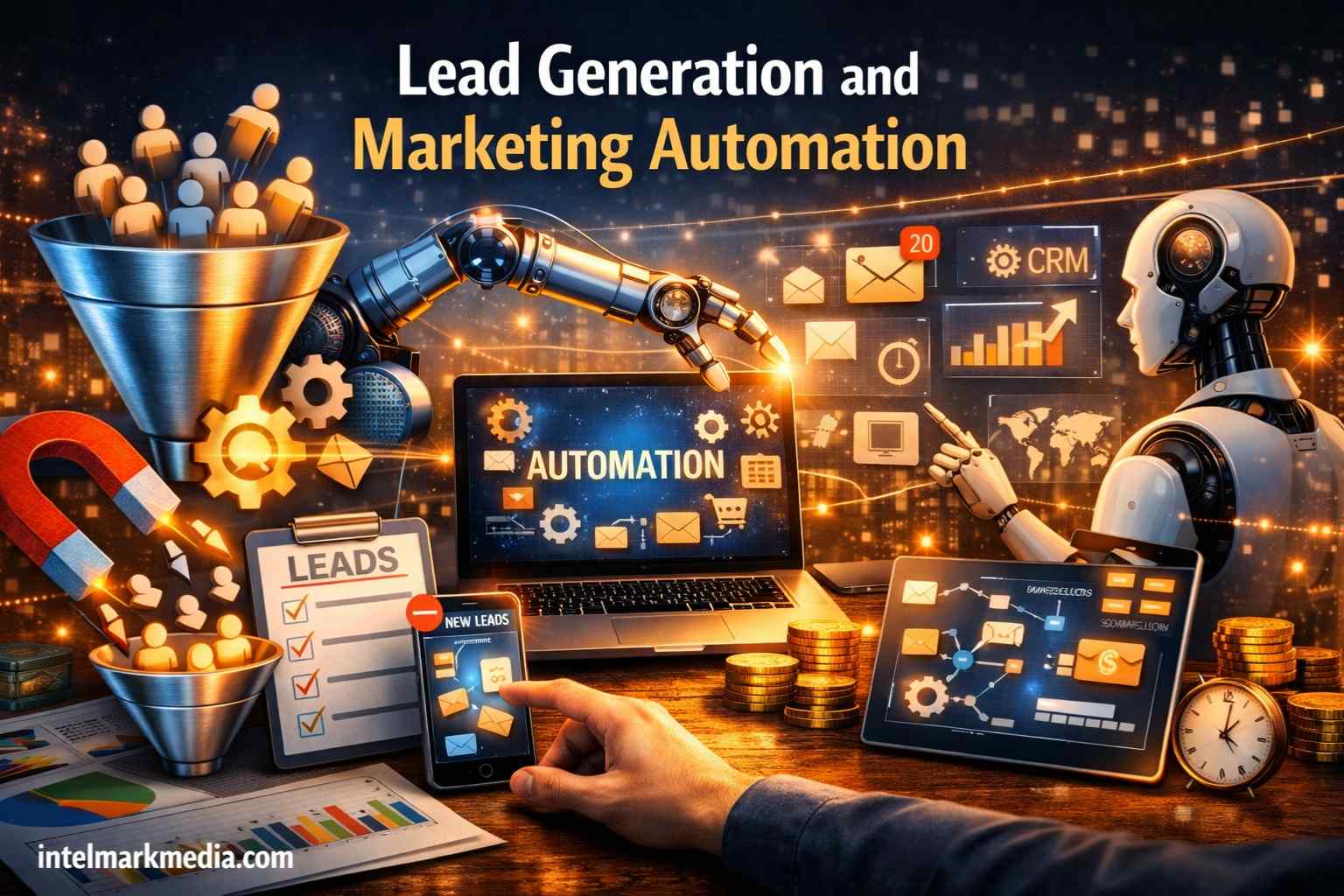
A marketing automation workflow is no longer just a “nice-to-have” system—it has become the backbone of modern digital marketing in the USA. Businesses today are dealing with more channels, more customer expectations, and less time to manually manage every lead. That’s where automation steps in to simplify the entire journey from awareness to conversion.
In 2026, marketing automation workflows are powered by AI, behavioral data, CRM systems, email automation, and omnichannel engagement strategies. Whether you run an eCommerce brand, SaaS company, or real estate business, a well-structured workflow helps you scale without increasing manual workload while improving customer experience and ROI.
What is a Marketing Automation Workflow?
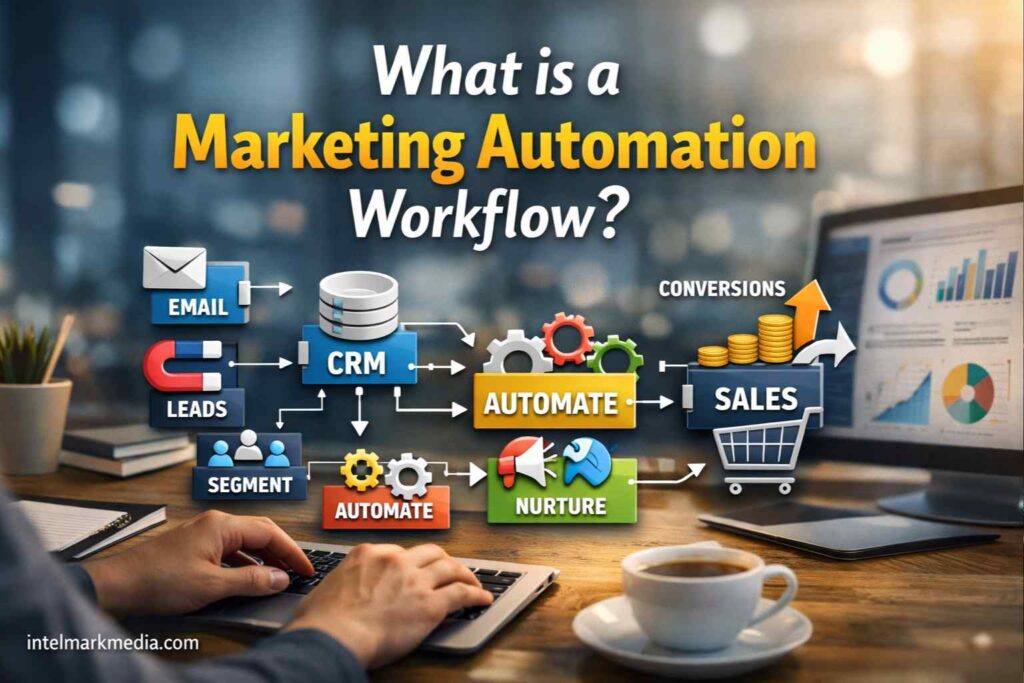
A marketing automation workflow is a structured sequence of automated actions triggered by user behavior, time-based events, or predefined conditions. It connects different marketing tools such as email marketing platforms, CRM systems, and analytics dashboards to deliver personalized communication at scale.
In simple terms, it replaces repetitive manual tasks with smart automation. For example, when a user downloads an ebook or signs up for a newsletter, the system automatically sends follow-up emails, assigns leads to sales teams, and updates CRM records without human intervention.
Why Marketing Automation Matters in 2026
Marketing automation is essential because customer journeys have become non-linear. People interact with brands across social media, websites, email, and ads before making a decision. Without automation, tracking and responding to these interactions becomes nearly impossible at scale.
Modern businesses in the USA use automation to improve lead nurturing, reduce customer acquisition costs, and increase lifetime value. With AI-driven personalization, brands can now send the right message at the right time, improving engagement and conversion rates significantly.
Core Components of a Marketing Automation Workflow
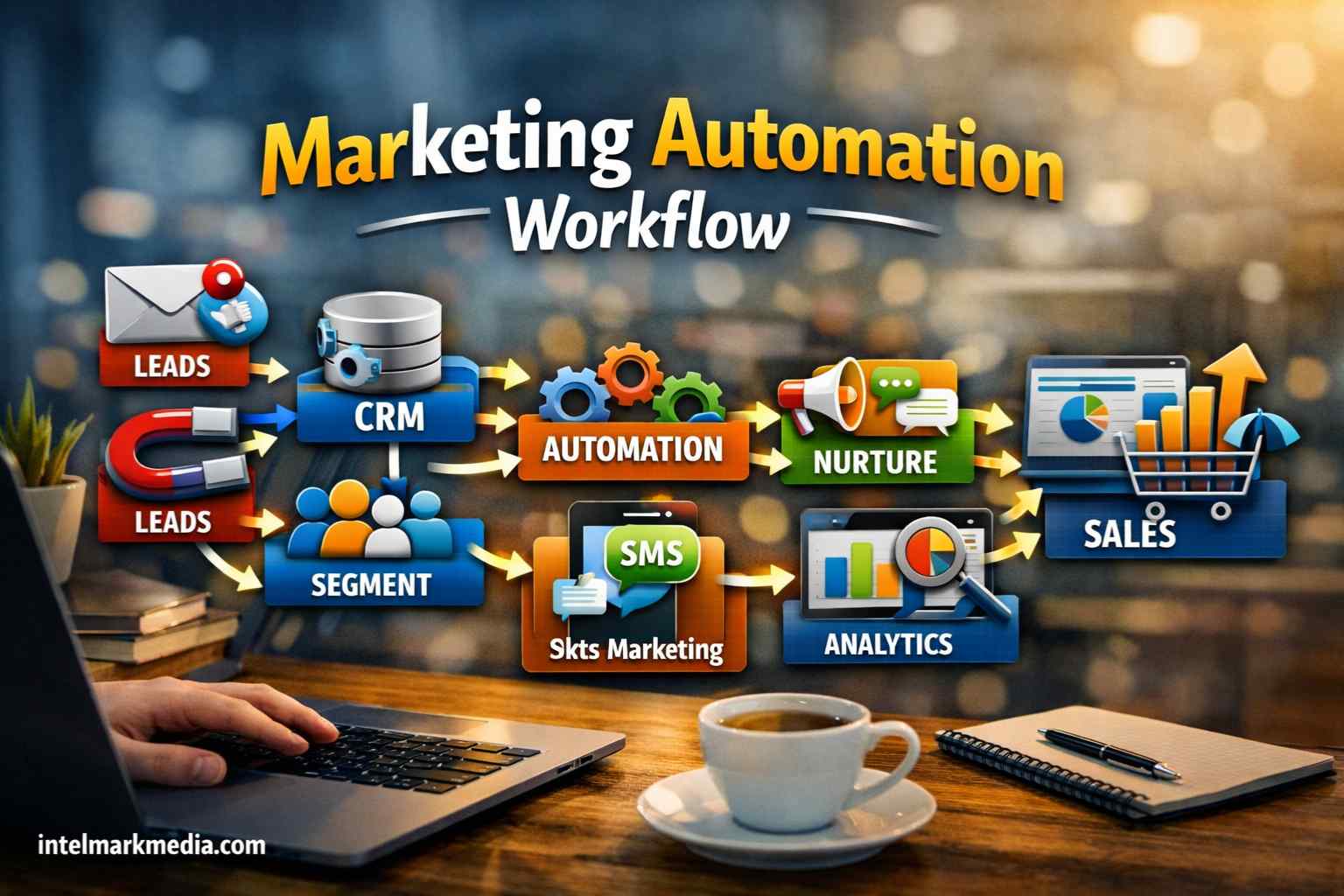
A successful workflow is built on several interconnected systems that work together seamlessly. These include CRM platforms, email automation tools, behavioral tracking systems, and analytics dashboards that measure performance in real time.
It also includes triggers and actions such as welcome sequences, abandoned cart emails, lead scoring models, and re-engagement campaigns. Together, these components ensure every customer receives a personalized experience based on their journey stage.
Step-by-Step Marketing Automation Workflow Process
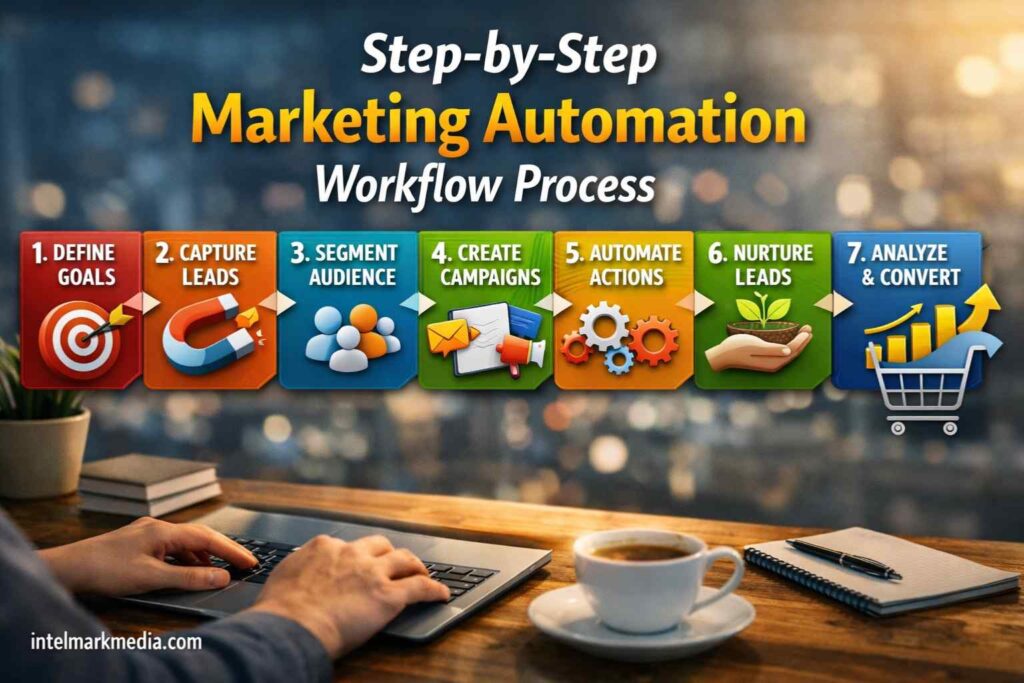
A typical workflow begins with capturing a lead through landing pages, forms, or social media ads. Once the lead enters the system, automation tools segment users based on interests, demographics, or behavior.
Next, personalized nurturing campaigns are triggered through email, SMS, or retargeting ads. As engagement increases, leads are scored and passed to the sales team when they are ready to convert, ensuring no opportunity is lost in the funnel.
Benefits of Marketing Automation Workflows
Marketing automation improves efficiency by eliminating repetitive tasks and allowing teams to focus on strategy and growth. It ensures consistent communication with leads, which builds trust and increases conversion probability over time.
It also improves data accuracy and decision-making. With real-time analytics, businesses can understand customer behavior, optimize campaigns, and increase ROI through continuous improvement.
Real-World Example of Automation Workflow
A SaaS company in the USA can use automation to guide users from free trial to paid subscription. When a user signs up, they receive onboarding emails, product tutorials, and personalized tips based on usage behavior.
If the user becomes inactive, a re-engagement workflow is triggered offering incentives or helpful content. This structured approach significantly increases retention and reduces churn without manual intervention.
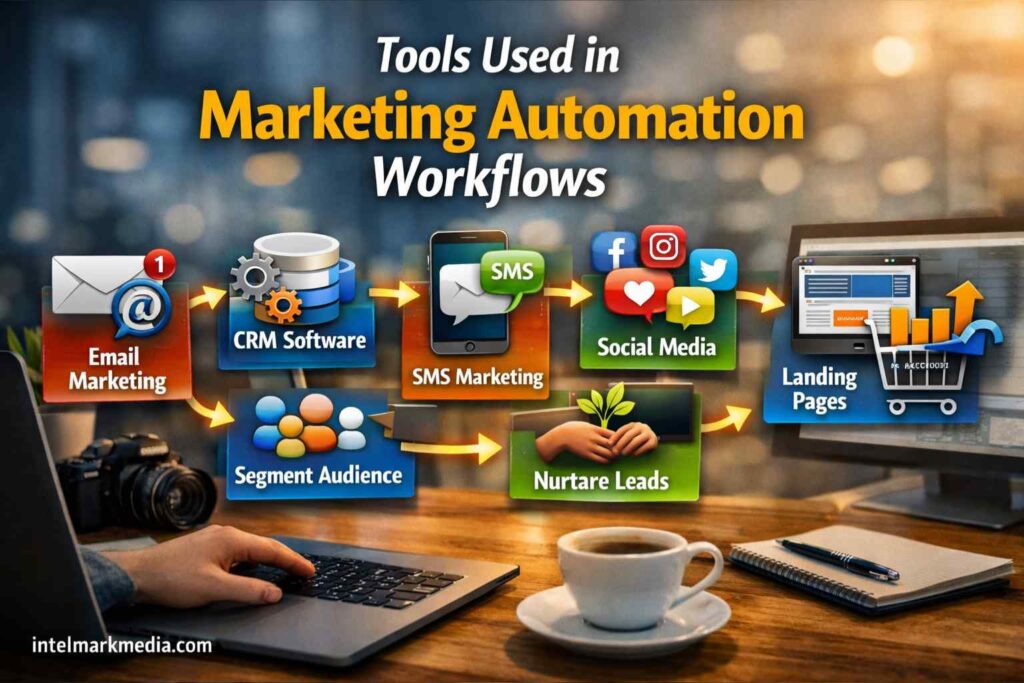
Tools Used in Marketing Automation Workflows
Popular tools include CRM platforms, email automation software, and analytics systems that help businesses build scalable workflows. These tools integrate with websites, social media platforms, and ad networks for seamless data flow.
Commonly used solutions include HubSpot, Salesforce, Active Campaign, and Market. These platforms support AI-based segmentation, lead scoring, and omnichannel automation for advanced marketing strategies.
Also Read: Contract Management Automation for Faster Workflows
Conclusion
Marketing automation workflows are transforming how businesses in the USA attract, nurture, and convert customers. With the right structure, tools, and strategy, companies can scale faster while delivering highly personalized experiences across every channel.
If you want to implement a high-performing marketing automation system for your business, connect with intelmarkmedia.com and start building a smarter, conversion-driven growth engine today.
FAQ About Marketing Automation Workflow
Q1: What is a marketing automation workflow?
Ans: A marketing automation workflow is a structured system that automates marketing tasks like emails, lead nurturing, and follow-ups to improve efficiency and conversions.
Q2: How does a marketing automation workflow work?
Ans: It works by triggering automated actions based on user behavior, such as sending emails or segmenting leads to deliver personalized marketing experiences.
Q3: What are the benefits of marketing automation workflow?
Ans: It improves lead generation, saves time, increases customer engagement, and ensures consistent communication across multiple marketing channels.
Q4: Which tools are used in marketing automation workflow?
Ans: Popular tools include CRM and automation platforms that manage email campaigns, customer data, analytics, and sales funnel automation.
Q5: Is marketing automation workflow good for small businesses?
Ans: Yes, it helps small businesses scale faster by automating repetitive tasks and improving customer targeting with minimal manual effort.
Q6: How to create an effective marketing automation workflow?
Ans: An effective workflow is created by defining goals, segmenting audiences, setting triggers, and optimizing campaigns based on performance data.